PVBridge
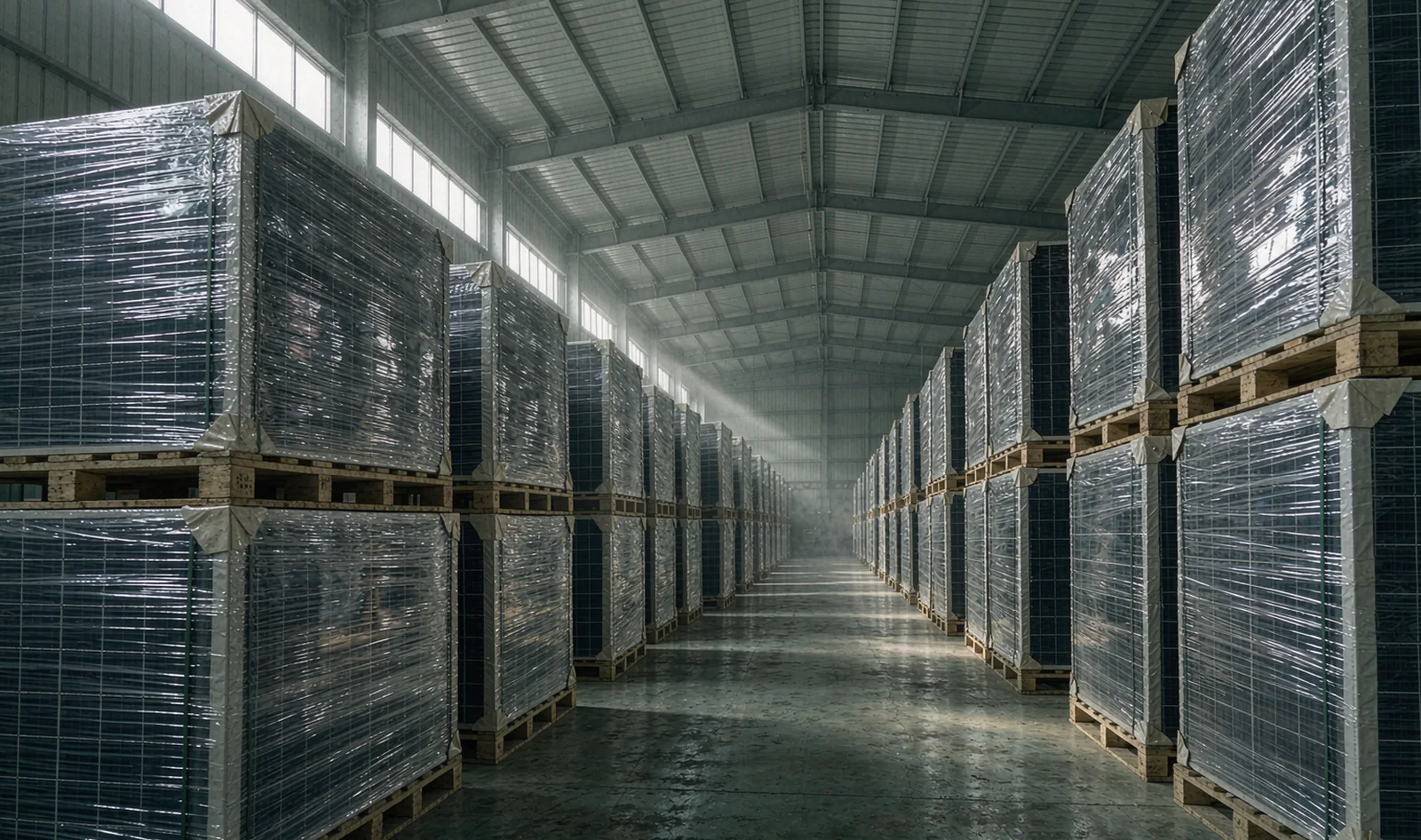
Palletised solar modules strapped and wrapped inside a warehouse

What we source, and where each line fails.

Four categories cover most of a plant. Each one has a different way of going wrong, which is why the checklist is different for each.

We are not an authorised distributor for any brand. Some lines we buy through authorised channels with full warranty and traceability; others we buy direct from the factory. Every quotation states which one you are getting — the price difference between them is real, and so is the difference in after-sales.

01

PV modules

Mono PERC · TOPCon · BC · bifacial — roughly 400 to 700 W, from one pallet to multi-MW

Tier 1 names are a bankability ranking, not a quality grade. A factory can sit on the list and still ship you a mixed-cell lot, and a strong second-tier line can beat it on both price and consistency. What separates them is not the badge — it is whether anyone checked your batch.

What we check

  • Certificate scope for your exact model. Not a "family" extension that quietly covers a different power bin.
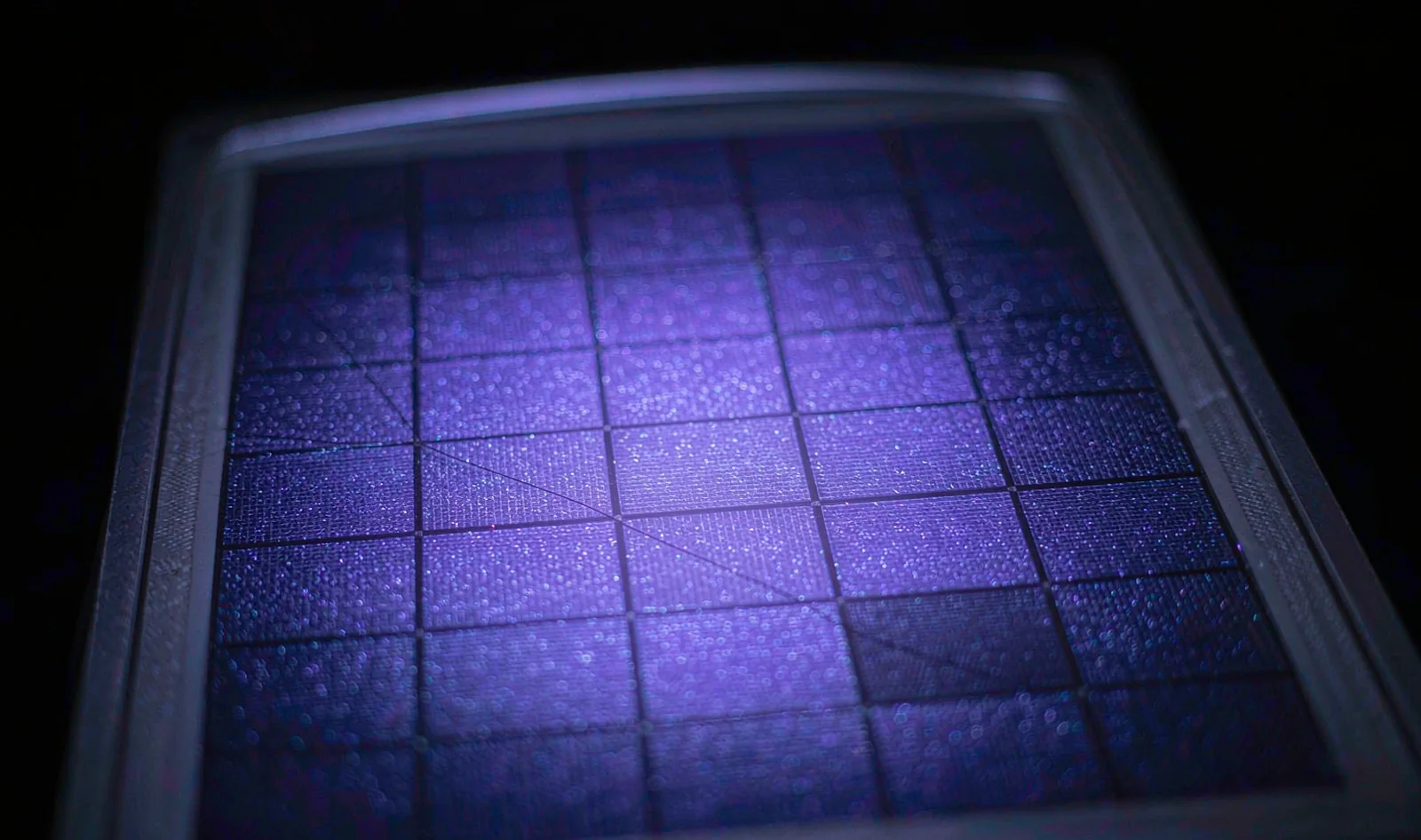
  • EL imaging of your lot. Micro-cracks and inactive areas are invisible on a datasheet, and 5–10% of modules in a typical lot show anomalies worth rejecting.
  • Flash-test verification. Measured Pmax, Voc and Isc against nameplate within IEC tolerance — witnessed, not faxed.
  • BOM lock. EVA, backsheet, frame and junction box matched to the approved sample before the line starts.

Where this line usually fails: "Grade A" used as a marketing word rather than a test result, down-binning (545 W shipped against 560 W ordered), and certificates that are valid for the factory but not for your SKU.
02

Inverters

String, hybrid and central — 3 kW to 350 kW, matched to your grid code

The inverter is the one component that has to satisfy a regulator, not just a customer. A unit that is perfect on paper can be unsellable in your market because nobody certified that grid code, or because the firmware is a grey-market build with no valid warranty behind it.

What we check

  • Grid-code certificate for the destination. EU, UK, Australia, Brazil, India and the Gulf all differ — the certificate must name your country, not the region.
  • Channel legitimacy. Whether the unit is traceable to an authorised distributor, or a parallel import with no service path.
  • Firmware and settings. Anti-islanding, power-factor and ride-through parameters set for your site, verified before shipment.
  • Service reality. Spare boards, replacement lead time and who actually answers when a unit trips in year three.

Where this line usually fails: grey-market units sold as new, a certificate issued for a different grid code, and warranty terms that name a distributor that no longer exists.

03

Battery storage (BESS)

LFP racks from ~50 kWh to containerised systems, with PCS pairing and fire suppression

Storage is the category where a cheap quote costs the most later. The two things that decide whether a BESS is insurable — cell provenance and the safety documentation — are also the two things a price-led supplier will quietly skip.

What we check

  • Cell provenance and grade. A-grade cells with a traceable batch, not B-grade relabelled. Cycle-life data at the depth of discharge you will actually run.
  • Dangerous-goods paperwork. UN38.3 test summary and MSDS complete and consistent with the shipped configuration — this stops more containers at origin than any customs rule.
  • Safety standards for the market. IEC 62619, UL 9540A where required, plus a fire-suppression spec that matches your insurer's expectations.
  • System pairing. PCS, EMS and rack compatibility checked as one system, not three line items that arrive and disagree.

Where this line usually fails: B-grade cells sold as A, a datasheet cycle life quoted at a DoD nobody uses, and a container held at the port because the UN38.3 summary does not match the modules inside.

04

Mounting & structures

Fixed-tilt, tracker components, roof rails, carports — engineered to your wind and snow load

Structures are where geography becomes cost. A design copied from a low-wind site and shipped to a coastal or high-snow site is not a discount, it is a liability with a ten-year delay on it.

What we check

  • Load calculation for your site. Wind and snow figures from your location, not a template from another latitude.
  • Galvanising thickness. Measured in microns, not described as "hot-dip". Coastal humidity finds the difference within three years.
  • Steel and weld certification. Grade certificates matched to the drawings that were actually approved.
  • Packing for sea freight. Bundling and container mix planned so heavy steel does not arrive on top of your modules.

Where this line usually fails: galvanising under spec, load calculations reused from a different project, and mixed steel grades inside one shipment.

Compliance · documentation

A certificate is a claim until someone opens the issuer's database.

Most customs stops are not caused by a missing certificate. They are caused by a certificate that exists, looks correct, and covers a different model, a different factory, or a period that has already expired. The paperwork is checked here, against the issuer, before the booking is made.

What travels with a compliant shipment

  • IEC 61215 and IEC 61730. Design qualification and safety, matched to the exact model code on the invoice.
  • UL 61730 or UL 1741. Where North America is the destination — and the listing holder, not just the report.
  • CBAM product carbon footprint. Lifecycle data reaching polysilicon, ingot and wafer, with the methodology stated.
  • Third-party verified LCA. Accredited body, report number, valid for the production site you are buying from.
  • Certificate of origin. Consistent with the customs value and the entity that actually exported.
  • UN38.3 and MSDS. For any lithium cells or BESS travelling in the same container.

Where this line usually fails: a valid certificate issued to a sister company, a carbon figure calculated with default values instead of measured data, and an LCA that stops at cell level because the wafer data was never collected.

Electroluminescence scan of a solar module with one inactive cell
EL image, 60-cell moduleThe dark cell is inactive. Whether that becomes a replacement or a discount depends entirely on who is holding the report.

Send the drawings, not just the quantity.

Site plan, single-line diagram or a spec sheet is enough for us to tell you what will actually work — and what will be a problem at customs.

Start a mandate